How We Work: The i ii concept Method test
本文章只提供英文版本。
Clients rarely ask how a studio works — until they’ve been burned by one that didn’t. So it is worth saying plainly what we do between the first meeting and the day the doors open — because the method is the reason the outcome is repeatable.
Listening before drawing
We do not open the drawing software on day one. The first phase of any project is deliberately unproductive-looking: we listen. We sit with the people who will run the space and the people who will use it, and we try to hear the brief behind the brief.
A client asks for “more seats.” What they often mean is “the same revenue with fewer no-shows,” or “a room that feels full at forty covers instead of empty at sixty.” Those are different problems with different spatial answers, and only one of them is actually about seat count. The job in this phase is to separate the request from the need, on the record, before a single line commits us to the wrong one.
It is the least glamorous stage and the one that saves the most money. Every hour spent understanding the problem is an hour not spent beautifully solving the wrong one.
Concept as a testable hypothesis
A concept, for us, is not a mood board. It is a hypothesis — a specific, arguable claim about how the space should behave, written plainly enough that it can be tested and, if necessary, proven wrong.
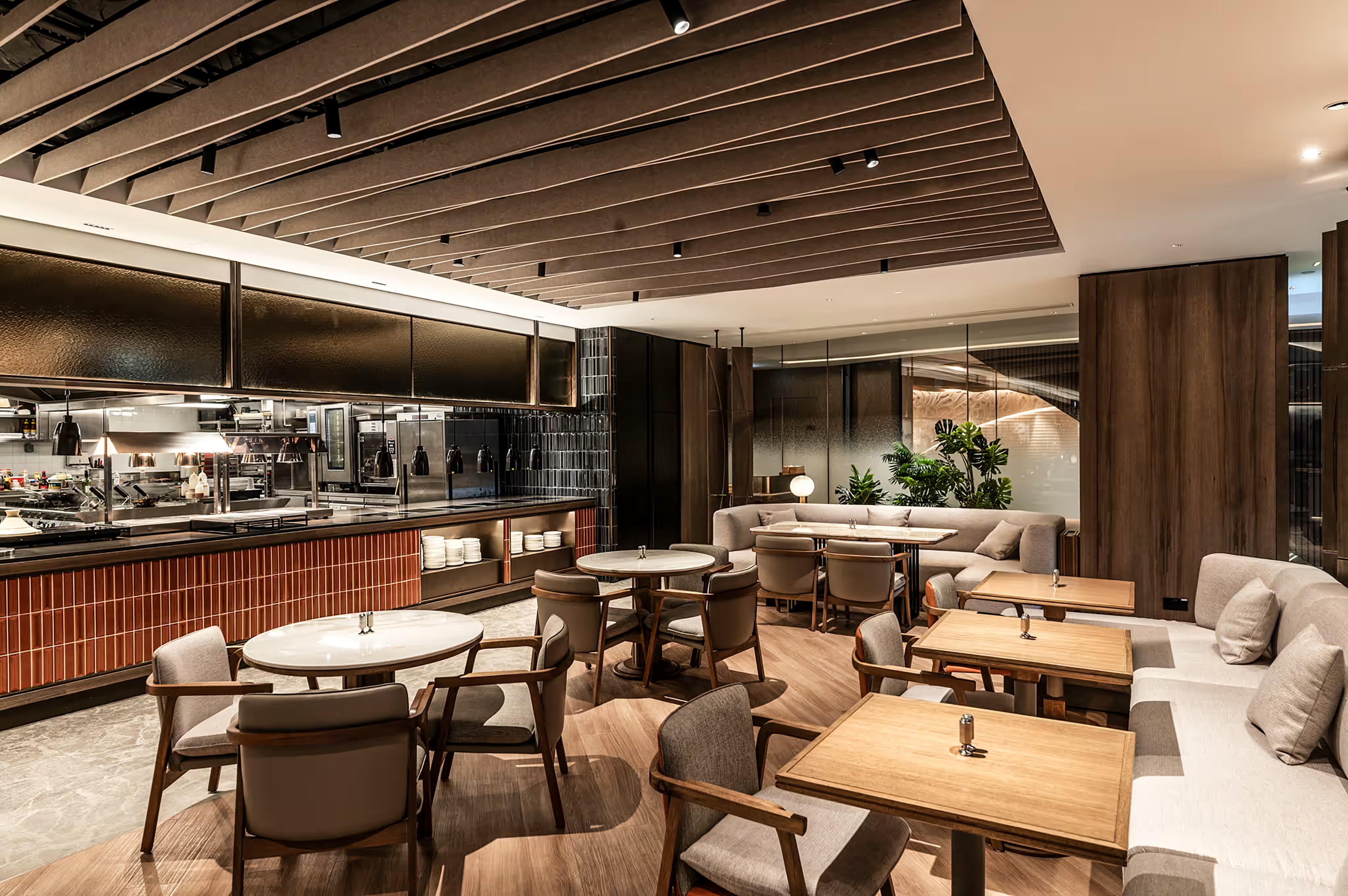
“This restaurant works if a solo diner at the counter feels hosted, not stranded.” “This office works if a new hire finds the coffee, and three colleagues, in their first ten minutes.” Statements like these do real work. They give every later decision a question to answer to. When we debate a material, a light level, a doorway, we are not trading opinions — we are asking whether the choice serves the hypothesis. Taste still matters enormously, but it is taste in service of an argument, not taste as the argument.
This is also what makes a concept survivable. Budgets get cut and sites throw surprises; a mood board shatters on contact with either. A hypothesis bends — you can find a cheaper way to keep the solo diner hosted, and know you have kept the thing that mattered.
Detailing is design
There is a myth that design is the big idea and detailing is the tidying-up afterward. We think that is backwards. The idea is a promise; the detail is whether you keep it.
A warm room is warm because of a junction between timber and plaster that most people will never consciously notice. A calm room is calm because a hundred small decisions about edges, shadow gaps, and how light meets a surface all pull in the same direction. Get the concept right and botch the details, and the room quietly breaks its own promise — nobody can name the fault, but everybody feels it.
So we detail as if the concept depends on it, because it does. We prototype the junctions that repeat. We mock up the lighting before we trust it. We spend our attention where the eye and the hand actually land — the door handle, the tabletop, the threshold — and we are relaxed about the places nobody touches. Precision is a budget; we spend it where it shows.
Handover is not the end
A project does not end when we hand over the keys. That is roughly its midpoint. A space is a hypothesis; occupancy is the experiment, and the results only arrive once real people are using it every day.
So we go back. We watch a real service, a real Monday morning. We see where staff have moved a station, taped over a switch, or improvised a workaround — and we read each one as feedback, not failure. Some become quick fixes on the current site. Others become notes that make the next project sharper. This is how a studio compounds: not by starting fresh each time, but by carrying forward what the last room taught us.
The method is not a secret and it is not proprietary. It is just the discipline of listening hard, arguing honestly, detailing seriously, and refusing to look away after the photos are taken. Do that consistently, and good rooms stop being luck.